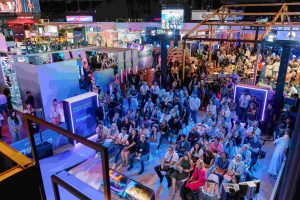


Middle East Event Show 2027 Brings 6,000+ Events Professionals Together in Dubai
The people and companies behind the Middle East’s rapidly expanding live-events industry will gather at Dubai World Trade Centre on 1 and 2 June 2027 when the Middle East Event Show returns to Sheikh Rashid Hall.
The exhibition and seminar programme will be followed by the Middle East Event Awards at Madinat Jumeirah on 3 June.
The show connects event agencies, organisers, venues, production companies, technology providers, entertainment suppliers, corporate marketing teams and government buyers across the MICE and live-experience industries.
Its latest platform figures point to more than 6,000 event professionals, 100-plus exhibitors and suppliers, dozens of free seminars and workshops, and speakers from across the regional and international events business.
Behind these numbers sits a much larger industry.
Conferences.
Exhibitions.
Concerts.
Festivals.
Product launches.
Corporate meetings.
Sports events.
Weddings.
Brand activations.
Government ceremonies.
Every successful event depends on an extensive network of specialists that most visitors never see.
Middle East Event Show brings that network together.
The Middle East Events Industry Is Growing Rapidly
The organiser describes the regional events market as an industry worth more than US$50 billion.
Several forces are driving growth.
Tourism strategies are expanding.
New venues are opening.
Saudi Arabia is investing heavily in entertainment.
The UAE continues attracting major international conferences and exhibitions.
Sports events are increasing.
Global brands want experiential marketing.
Corporations are spending on conferences and employee events.
Governments are using major events to build international visibility.
For event businesses operating in Dubai, this growth creates enormous opportunity.
It also creates competition.
Agencies need stronger creative concepts.
Production companies need better technology.
Venues need distinctive experiences.
Organisers need measurable returns.
Events Are Businesses, Not Just Experiences
Guests normally see the final result.
Lights.
Music.
Speakers.
Stages.
Food.
Screens.
Decor.
What they do not see is the commercial structure behind the event.
Budgets.
Supplier negotiations.
Venue contracts.
Health and safety.
Insurance.
Technical rehearsals.
Transportation.
Ticketing.
Staffing.
Power requirements.
Security.
Permits.
A large event may involve hundreds of companies and thousands of individual decisions.
One failure can affect everything.
The Middle East Event Show exists for the professionals responsible for making those decisions.
Event Technology Is Becoming More Important
Technology now influences almost every part of the event journey.
Registration can happen online.
Mobile apps provide schedules.
Digital badges control access.
AI-powered matchmaking connects attendees.
RFID technology tracks participation.
Interactive displays create engagement.
Event platforms manage networking.
Analytics measure behaviour.
Streaming allows remote audiences to participate.
Organisers increasingly expect technology to provide measurable information rather than simply create impressive visuals.
AI Is Entering Event Planning
Artificial intelligence is becoming one of the industry’s most discussed tools.
Organisers can use AI to draft communications.
Marketing teams can generate content.
Event data can be analysed.
Chatbots answer attendee questions.
Matchmaking platforms can recommend relevant meetings.
Scheduling can become more efficient.
Creative teams use generative tools during concept development.
However, events are inherently human.
People attend to meet other people.
Technology should therefore reduce friction rather than replace interaction.
The strongest AI application may be the one attendees barely notice.
Personalisation Is Becoming the Next Challenge
Large conferences traditionally provide the same programme to everyone.
That can become overwhelming.
A visitor may have 100 sessions available but only ten are relevant.
Digital event platforms can increasingly personalise schedules.
A technology buyer may receive different recommendations from an investor.
A marketing professional sees different exhibitors from a procurement executive.
Personalisation can make large events feel smaller and more relevant.
The challenge is collecting enough information without creating privacy concerns.
Live Experiences Still Matter in a Digital World
Remote meetings became normal during the pandemic.
That did not eliminate physical events.
In many ways, it demonstrated what digital communication struggles to reproduce.
Informal conversation.
Shared emotion.
Spontaneous meetings.
Live entertainment.
Physical product demonstrations.
Trust built face to face.
This explains why major exhibitions and conferences returned strongly.
The industry now understands that digital and physical formats can complement one another rather than compete completely.
Experiential Marketing Is Growing
Brands increasingly use physical experiences to create emotional connections with audiences.
A product launch can become an immersive environment.
Automotive brands create driving experiences.
Technology companies build interactive demonstrations.
Luxury companies use temporary installations.
Consumer brands create social-media-friendly activations.
The goal is often to make people participate rather than simply watch.
This requires creative agencies, production specialists and technology providers to work closely together.
Immersive Technology Keeps Improving
LED screens have become larger and more sophisticated.
Projection mapping can transform buildings.
Interactive installations respond to movement.
Extended reality can combine physical and digital environments.
Drones create aerial displays.
Spatial audio changes how sound is experienced.
These technologies create impressive possibilities.
But creativity still matters more than equipment alone.
A room filled with expensive screens does not automatically create a memorable event.
Technology needs a purpose within the story.
Production Companies Operate Under Pressure
Live events have fixed deadlines.
A conference cannot open two days late because equipment installation was delayed.
A concert cannot postpone soundcheck because a supplier missed delivery.
This creates unusual operational pressure.
Production teams work backward from an immovable opening time.
Lighting.
Audio.
Video.
Rigging.
Power.
Staging.
All systems need to work together.
The event-production suppliers exhibiting at MEES operate within this demanding environment.
AV Technology Is Central to Modern Events
Audio-visual systems form the visible technical backbone of many live events.
Professional sound systems need to deliver clear audio throughout a venue.
Screens must remain visible.
Cameras capture speakers.
Streaming systems support remote viewers.
Lighting establishes atmosphere.
Control systems coordinate multiple technologies.
Corporate events increasingly expect broadcast-level production quality.
Attendees accustomed to high-quality online media notice poor presentation immediately.
Power Is One of the Invisible Essentials
Events consume significant electricity.
Lighting.
Sound.
LED walls.
Broadcast equipment.
Catering.
Temporary structures.
Outdoor events may operate far from fixed electrical infrastructure.
Reliable temporary power therefore becomes essential.
Increasingly, event companies also want lower-emission solutions.
Battery systems, hybrid generators and improved energy management can reduce fuel consumption.
Sustainability is entering event production through practical operational decisions.
Sustainable Events Are Becoming a Requirement
Events can generate large quantities of waste.
Temporary carpets.
Printed signage.
Single-use structures.
Food waste.
Transport emissions.
Disposable branding.
Clients increasingly expect organisers to reduce this impact.
Modular stands can be reused.
Digital signage can replace some printed materials.
Materials can be rented rather than discarded.
Waste can be separated.
Local suppliers reduce transportation.
The strongest sustainability initiatives are designed into the event from the beginning rather than added at the end.
Venues Are Competing on More Than Space
A venue used to sell square metres.
Modern venues sell much more.
Technology infrastructure.
Catering.
Location.
Transport connections.
Sustainability.
Service.
Flexibility.
Hotels.
Destination experience.
Event organisers want venues that simplify delivery.
A technically difficult building can create unnecessary cost.
A well-designed venue can reduce operational problems.
MEES connects venue operators directly with agencies and corporate buyers.
The MICE Sector Supports Tourism
Meetings, incentives, conferences and exhibitions bring high-value international visitors into cities.
Delegates use hotels.
Restaurants.
Taxis.
Airlines.
Entertainment.
Retail.
Large exhibitions can attract tens of thousands of visitors.
Governments therefore compete actively for major business events.
Winning an international congress can create economic benefits extending far beyond venue rental.
This explains why the events industry is closely connected with tourism strategy.
Saudi Arabia Is Transforming the Regional Market
Saudi Arabia’s investment in tourism, sport and entertainment is creating significant opportunities for event suppliers.
Major festivals.
Conferences.
Sports competitions.
Entertainment developments.
Corporate programmes.
International agencies are expanding operations in the Kingdom.
Regional production businesses are growing.
The Middle East Event Show gives companies working across the UAE and Saudi Arabia a shared networking platform.
Sports Events Require Specialist Expertise
Sports events combine competition with large-scale operations.
Temporary seating.
Broadcasting.
Fan zones.
Security.
Ticketing.
Transport.
Hospitality.
Sponsorship activation.
Crowd management.
International competitions may involve teams, federations, broadcasters and government authorities simultaneously.
The Gulf’s growing sports calendar therefore creates another major market for event professionals.
Entertainment Events Are Becoming More Ambitious
Concerts and festivals across the Middle East have increased in scale.
International artists bring global production expectations.
Audiences compare local events with experiences in London, Las Vegas, Singapore and other major entertainment centres.
This pushes regional suppliers to improve.
Production standards rise.
Venue infrastructure improves.
Specialist expertise becomes more valuable.
Safety Cannot Be Compromised
Temporary events create unique safety challenges.
Heavy equipment can be suspended above audiences.
Temporary structures need engineering.
Large crowds require emergency planning.
Electrical systems operate under demanding conditions.
Pyrotechnics and special effects add risk.
Event safety therefore depends on professional planning and qualified suppliers.
No creative concept is successful if people are placed in unnecessary danger.
Crowd Management Requires Data and Experience
Large visitor numbers create logistical challenges.
Where will people enter?
How quickly can security screening process them?
Where do queues form?
How will visitors leave after the event?
Technology can help model crowd behaviour.
Sensors can provide information.
But experienced operational teams remain essential.
Crowd management needs to be planned before doors open, not improvised after congestion begins.
The Seminar Programme Provides Free Education
Middle East Event Show combines its exhibition with free seminars and workshops.
Topics increasingly include event technology, artificial intelligence, commercial growth, sustainability, experiential marketing and industry resilience.
This makes the event useful even for visitors who are not actively sourcing suppliers.
Professionals can study how other organisations are approaching similar challenges.
For a fast-moving industry, peer learning is valuable.
Awards Recognise the Industry’s Best Work
The Middle East Event Awards take place on 3 June at Madinat Jumeirah.
Awards recognise agencies, suppliers, venues, technologies and individual professionals responsible for outstanding events and experiences.
Recognition matters commercially.
Winning projects become case studies.
Agencies gain credibility.
Employees receive industry visibility.
The awards also provide a social conclusion to the professional programme.
6,000+ Professionals Create a Regional Marketplace
The show’s latest figures point to more than 6,000 event-industry professionals.
This creates an unusually concentrated audience.
Event organisers can find suppliers.
Corporate buyers can identify agencies.
Technology companies can demonstrate products.
Venues can attract new business.
Production specialists can build partnerships.
For suppliers, meeting one major client may justify the entire exhibition.
Two Days About the Business Behind Live Experiences
Audiences remember the final moment.
The stage reveal.
The concert.
The keynote.
The award ceremony.
The product launch.
Event professionals remember everything required to make that moment happen.
Months of planning.
Supplier negotiations.
Technical drawings.
Risk assessments.
Rehearsals.
Last-minute problems.
Thousands of details need to align.
On 1 and 2 June 2027, Middle East Event Show will bring the people responsible for those details together at Dubai World Trade Centre.
Then, on 3 June, the industry will gather at Madinat Jumeirah to celebrate its best work.
The technology will continue changing.
AI will become more common.
Experiences will become more immersive.
Sustainability expectations will rise.
But one principle is unlikely to change.
A great event feels effortless to the audience precisely because enormous effort happened behind the scenes.