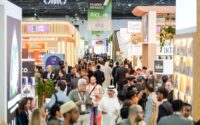


GulfHost 2026: How AI and Automation Are Reinventing the Professional Kitchen
Restaurants are usually judged by what reaches the table.
Taste.
Presentation.
Service.
Atmosphere.
Price.
Behind every plate, however, sits an operational system that customers rarely see.
Ovens.
Refrigeration.
Prep stations.
Dishwashing.
Inventory.
Staff scheduling.
Energy use.
Point-of-sale systems.
Food safety.
Delivery platforms.
From 3 to 5 November 2026, that hidden infrastructure becomes the main attraction when GulfHost returns to Dubai World Trade Centre.
The hospitality and foodservice exhibition brings together professional kitchen equipment, café systems, hotel and restaurant technology, front-of-house solutions and increasingly sophisticated automation.
The timing is important because the restaurant industry is under pressure from several directions at once.
Labour costs.
Energy costs.
Food inflation.
Delivery expectations.
Customer demand.
Sustainability.
The professional kitchen is therefore becoming much more technological.
The Kitchen Is Becoming a Data Environment
Traditional kitchens depend heavily on experience.
A chef understands timing.
A manager understands demand.
A technician knows when equipment sounds wrong.
Those forms of knowledge remain valuable.
Digital systems add another layer.
Modern refrigeration can monitor temperature continuously.
Kitchen-management software can track production.
POS systems record ordering patterns.
Inventory tools monitor ingredients.
Equipment can report faults.
The kitchen becomes measurable.
That matters because businesses cannot improve efficiently what they cannot see.
AI Can Help Predict Demand
One of the hardest restaurant problems is deciding how much food to prepare.
Prepare too little and customers wait.
Prepare too much and ingredients are wasted.
Demand varies by day.
Weather.
Events.
Season.
Delivery trends.
Promotions.
Artificial intelligence can analyse historical sales and help forecast demand more accurately.
The objective is not perfect prediction.
Even a modest improvement can reduce waste and improve purchasing decisions.
At scale, that can significantly affect profit.
Smart Ovens Change the Role of Equipment
A conventional oven provides heat.
A smart oven can increasingly do more.
Store cooking programmes.
Monitor temperature precisely.
Adjust humidity.
Guide staff through recipes.
Record usage.
Potentially connect with other kitchen-management systems.
This creates greater consistency.
A restaurant group operating dozens of locations wants the same dish to taste similar everywhere.
Automation helps reduce variation.
It does not eliminate culinary skill.
It standardises repetitive processes so chefs can focus more attention on areas where judgement matters.
Predictive Maintenance Can Reduce Downtime
A refrigerator failing during service is more than an inconvenience.
Food can spoil.
Operations may stop.
Emergency repair costs rise.
Predictive maintenance aims to identify abnormal behaviour before full failure occurs.
Sensors can monitor equipment performance.
Software can recognise patterns.
Maintenance can be scheduled earlier.
The concept is common in manufacturing.
Hospitality is adopting similar thinking.
For large hotel groups and restaurant chains, reducing unexpected downtime can create substantial savings.
Energy Efficiency Has Become Financially Important
Commercial kitchens consume large amounts of energy.
Cooking equipment.
Cooling.
Ventilation.
Dishwashing.
Lighting.
Water heating.
Refrigeration.
Energy-efficient equipment therefore affects operating costs directly.
The sustainability argument is important.
The financial argument can be even more persuasive.
If a new oven or refrigeration system reduces energy use consistently for years, the purchasing decision becomes easier to justify.
Efficiency moves from environmental messaging into business economics.
Water Is Another Hidden Cost
Professional kitchens use water constantly.
Cleaning.
Dishwashing.
Food preparation.
Ice.
Sanitation.
Reducing water use without compromising hygiene creates both environmental and economic value.
Better dishwashing systems.
Low-flow equipment.
Improved cleaning processes.
Leak monitoring.
These changes may appear minor.
Across thousands of meals, small efficiencies accumulate quickly.
Cloud Kitchens Changed Restaurant Economics
Food delivery platforms created a different type of restaurant.
No dining room.
No prime retail frontage.
No elaborate interior.
The kitchen produces food specifically for delivery.
Cloud kitchens can operate several brands from one location.
This reduces some costs.
It creates different challenges.
Speed.
Packaging.
Order management.
Delivery coordination.
Menu design.
Compact high-output equipment becomes especially valuable.
The kitchen needs to operate more like a production system.
Delivery Changed What Equipment Needs to Do
Food designed for immediate table service behaves differently from food travelling twenty minutes inside packaging.
Texture changes.
Temperature falls.
Steam affects crispness.
Presentation can deteriorate.
Restaurants therefore need to think about the entire delivery journey.
Packaging becomes part of product design.
Equipment may need to support faster production.
Holding systems need to maintain food quality.
Technology cannot solve every delivery problem, but it can help reduce inconsistency.
Robotics May Enter Select Kitchen Tasks
Robotic food preparation attracts attention because kitchens contain many repetitive activities.
Frying.
Portioning.
Mixing.
Dispensing.
Simple assembly.
Automation may be particularly useful in high-volume environments where consistency matters more than improvisation.
Fast-food operations are obvious candidates.
The technology makes less sense for every restaurant.
A chef-led fine-dining kitchen and a high-volume quick-service outlet have very different needs.
The future is likely to involve selective automation rather than one universal robotic kitchen.
The Human Chef Is Not Disappearing
Cooking involves far more than mechanical execution.
Taste.
Creative judgement.
Cultural knowledge.
Ingredient understanding.
Adaptation.
Leadership.
Menu development.
Customer expectations.
A machine can reproduce a programmed process.
That is different from deciding what the restaurant should become.
Automation is most valuable when it removes repetitive tasks and operational friction.
The chef still creates the culinary identity.
Food Safety Benefits From Better Monitoring
Temperature control is critical.
A refrigerator that operates outside safe limits can create serious risks.
Digital sensors allow continuous monitoring rather than occasional manual checks.
Alerts can notify staff when conditions change.
Automated records can also improve traceability.
This creates better evidence that food-safety procedures were followed.
Technology does not replace hygiene discipline.
It makes compliance easier to observe.
POS Systems Have Become Business Intelligence Platforms
A point-of-sale terminal once mainly recorded payment.
Modern systems can provide much richer information.
Which dishes sell best?
At what time?
Which menu items are rarely ordered?
Which promotions work?
How much does the average customer spend?
How does one branch compare with another?
This transforms transaction data into operational insight.
Restaurants can redesign menus based on evidence rather than intuition alone.
Menu Engineering Is Becoming More Analytical
Every menu item has two important characteristics.
Popularity.
Profitability.
A dish may sell extremely well but have poor margins.
Another may generate strong profit but rarely be ordered.
Combining sales data with ingredient costs helps restaurants understand which products genuinely drive the business.
AI can make this analysis more sophisticated.
But the final decision remains strategic.
A low-profit signature dish may still be important because it attracts customers.
Numbers need context.
Coffee Shops Are Technology Businesses Too
The café sector is highly competitive across the Gulf.
Espresso machines.
Grinders.
Water systems.
Brewing equipment.
POS.
Loyalty apps.
Delivery.
Roasting.
Temperature control.
Small operational differences can affect both coffee quality and service speed.
A busy café serving hundreds of customers needs repeatability.
Technology helps baristas maintain quality during peak periods.
Front of House Is Becoming Digital
Technology is not limited to the kitchen.
Digital menus.
Self-service kiosks.
Mobile ordering.
QR systems.
Table management.
Reservation platforms.
Customer loyalty.
Payment.
These tools change the relationship between staff and guests.
Used well, they remove friction.
Used badly, they make hospitality feel impersonal.
The objective should not be eliminating human interaction.
It should be removing unnecessary waiting and repetitive tasks.
Luxury Hospitality Still Needs Human Service
Dubai’s hospitality market includes some of the world’s most service-intensive hotels and restaurants.
High-end guests often expect personal attention.
Technology therefore needs to disappear into the experience.
A hotel may use sophisticated systems behind the scenes while the guest experiences effortless human service.
The best hospitality technology often works invisibly.
Customers notice the result rather than the software.
Tableware Still Shapes Perception
Not everything at GulfHost is digital.
Plates.
Glassware.
Cutlery.
Furniture.
Linens.
Presentation equipment.
These physical details influence how food is perceived.
The same dish can feel completely different depending on its presentation.
Hospitality remains multisensory.
Technology may optimise operations.
Design shapes emotion.
The strongest businesses need both.
Supply-Chain Resilience Has Become a Priority
Restaurants and hotels depend on equipment and supplies from many countries.
Recent disruptions demonstrated the risk of relying too heavily on one source.
Operators increasingly want alternatives.
Regional suppliers.
Multiple manufacturers.
Faster spare-part access.
Service support.
A machine with impressive specifications becomes less attractive if replacement parts require months to arrive.
Reliability extends beyond the equipment itself.
The supplier network matters.
Dubai Is One of the Best Test Markets for Hospitality Technology
Few cities combine such a dense mix of hospitality formats.
Luxury hotels.
Global restaurant chains.
Independent restaurants.
Cloud kitchens.
Beach clubs.
Food courts.
Cafés.
Catering.
Tourism attractions.
High-volume events.
This gives technology suppliers access to customers operating under very different conditions.
A solution that works in Dubai may have applications across the wider Gulf and other hospitality markets.
Visitors Can Experience the Industry Outside the Exhibition
GulfHost delegates do not need to travel far to see hospitality innovation in real life.
Dubai’s restaurant and hotel scene acts almost like an extended showroom.
Visitors planning dining, attractions and other activities around the exhibition can use Dubai City Guide.
The city’s hospitality economy therefore reinforces the relevance of the event itself.
The Future Kitchen Will Be More Connected
A professional kitchen ten years from now may still look familiar.
Ovens.
Knives.
Refrigerators.
Prep counters.
Dishwashers.
The intelligence around those objects will be different.
Equipment will communicate.
Software will analyse demand.
Maintenance will become more predictive.
Energy use will be measured more carefully.
Inventory will update automatically.
AI may help managers understand what is happening across the operation in real time.
Yet the final question will remain unchanged.
Does the customer enjoy the food?
GulfHost 2026 shows why technology matters most when it helps hospitality businesses answer that question more consistently, efficiently and profitably.
The kitchen of the future will be smarter.
Its success will still be judged one plate at a time.