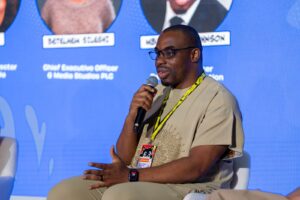


SACC 2026 Panel Examines How More Women Can Progress Into Creative Leadership In Animation
Mentorship, clearer career pathways and sustained workplace support can help more women progress from technical and production roles into positions where they lead creative decisions, animation industry professionals said at the Sharjah Animation and Comics Conference (SACC 2026).
During the panel Women Leading the Narrative Shift, moderated by media professional Mounia Aram, speakers Mbuotidem Johnson, CEO and Producer at Basement Animation; Esther Kemi Gbadamosi, CEO and Creative Director of Radioxity Media; Lola Aikins, Director of Animated Films – Tshimologong Precinct; and Betelhem Sileshi, CEO of G Media Studios, shared experiences from their respective studios and discussed practical approaches to training, career development and professional progression within animation.
Their discussion focused on how studios can identify talent early, provide meaningful mentorship and give creatives the experience needed to progress into directing, supervising and other leadership roles.
Creating a pool of interns for future
Lola Aikins, the only woman in their team and one of only two female animation directors in the country, spoke about her company’s internship programme that draws about 500 applicants a year – most of them men.
“We have a lot of women producers, but women making the creative decisions, directing and supervising, is still a challenge,” said the South African. “Men may be mentored by other men in the studios, while women are kind of thrown into the deep end and crash. I’m trying to make sure they have support throughout their career.”
She said she fought to keep a talented female applicant in the programme, and made a point of hiring a woman as storyboard artist on her own film.
Building careers with a clear destination
Esther Kemi Gbadamosi said long-term career planning is as important as technical ability: “Many times you find that women are good at the details, working on sequences. But when you ask what their ultimate goal is, there’s often no real answer”.
She contrasted this with male creatives she had encountered who, in her experience, often arrived with a more clearly defined career objective.
To address that gap, Radioxity Media began working with US stop-motion studio Laika around two months ago, with team members developing portfolios for review and building material towards specific professional goals.
“You are building material towards a specific career, whether that’s a studio in the US or in France,” Gbadamosi said. “The decisiveness has to start on the very first day.”
She added that professional expectations should ultimately be based on capability.
“All of us come in as unique individuals. What matters is skills and capacity, not whether you are male or female.”
Creating visible pathways into leadership
Betelhem Sileshi spoke about the role visible leadership can play in encouraging more women to pursue creative careers.
“Once you hire a woman in your company, it gives other women the chance to come forward with their talent,” she said.
Sileshi pointed to women already holding key positions within her company, including creative director and producer roles, and said representation can influence whether others see a viable path for themselves within the industry.
Moving beyond labels
Mbuotidem Johnson said women already work across multiple stages of production at his studio, including sound design and compositing. He also reflected on how conversations around gender in the industry had shaped his own thinking, including a Women in Animation session he attended at Annecy.
“Let’s not put ourselves in boxes, man or woman” he said. “I’m first a creative, and so are the women in this industry.”
Johnson said the emphasis should remain on creative ability, professional standards and the quality of the work produced.
The discussion concluded with a shared focus on practical measures that can help broaden access to leadership roles in animation, including mentorship, portfolio development, structured training and workplace cultures that support long-term progression.