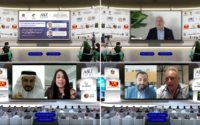


Abu Dhabi Festival 2026: How Culture Is Becoming a Form of Global Soft Power
Countries usually demonstrate power through things that are easy to measure.
Economic size.
Military capability.
Energy production.
Technology.
Trade.
Infrastructure.
Culture works differently.
A concert cannot force another country to change policy.
An exhibition cannot negotiate a trade agreement.
A museum cannot replace diplomacy.
Yet culture influences something equally important.
How a country is understood.
Abu Dhabi Festival 2026 demonstrates how seriously the UAE increasingly treats that form of influence.
Across several months, the festival brings together live music, visual arts, youth programmes, masterclasses, cultural dialogue and international collaborations.
Its significance extends beyond individual performances.
The festival shows how Abu Dhabi is using culture to create relationships that conventional diplomacy alone cannot always build.
Soft Power Works Through Attraction
The concept of soft power describes influence created through attraction rather than coercion.
Culture is one of its most visible forms.
Music travels across borders.
Art creates curiosity.
Education builds relationships.
Artists collaborate even when governments disagree.
A person may know little about a country politically but develop interest through film, architecture, literature or music.
That emotional connection matters.
Countries with strong cultural identities can influence global perception without delivering an explicit political message.
Abu Dhabi Is Building Cultural Infrastructure, Not Just Events
Hosting one famous artist creates attention.
Building institutions creates continuity.
Abu Dhabi has spent years developing a larger cultural ecosystem.
Museums.
Foundations.
Festivals.
Universities.
Public programmes.
Heritage institutions.
Artist initiatives.
Educational partnerships.
Abu Dhabi Festival fits inside that wider strategy.
The event is valuable partly because it does not exist alone.
Visitors encounter it within a city increasingly associated with serious cultural investment.
The Festival Extends Beyond the Main Stage
Large festivals are often judged by headline performances.
The deeper impact may happen elsewhere.
Youth programmes.
Masterclasses.
Artist conversations.
Educational sessions.
Workshops.
Community initiatives.
These create participation rather than simply spectatorship.
Someone attending a concert consumes culture.
A student participating in a masterclass begins producing it.
That difference matters if the objective is building a sustainable cultural ecosystem.
Festival Academy Invests in Skills
The Festival Academy programme creates opportunities around intensives, rehearsals and masterclasses.
This kind of initiative is important because artistic development requires access.
Young musicians and creators need to see professionals work.
They need feedback.
They need exposure to standards beyond their ordinary environment.
A masterclass may last only a short time.
Its influence can continue for years if a student encounters a new technique, idea or professional expectation.
Cultural development happens through these small transfers of knowledge.
Young Audiences Need Their Own Entry Points
Children do not necessarily experience culture in the same way adults do.
A formal concert hall may work for one audience.
Interactive, sensory environments may work better for another.
The Children’s Biennale at Umm Al Emarat Park reflects this idea.
The programme uses touch, sound, movement and light to encourage children to explore creativity through experience.
That is important.
Children should not be expected to appreciate culture only by behaving like miniature adults.
Strong cultural institutions create age-appropriate ways to participate.
Creative Confidence Begins Early
Education systems frequently reward correct answers.
Art operates differently.
There may be several possible interpretations.
Several ways to solve a creative problem.
Several valid responses.
Giving children access to creative environments helps develop comfort with ambiguity.
That ability matters beyond art.
Innovation also requires experimentation.
A person afraid of making an imperfect attempt will struggle to create something genuinely new.
Creative education therefore contributes to broader problem-solving skills.
Culture Can Connect Generations
Festivals can also bridge age groups.
Older audiences may connect with traditions they already know.
Younger audiences encounter those traditions differently.
Contemporary artists reinterpret older forms.
Families attend together.
The cultural conversation becomes intergenerational.
This is especially important in societies undergoing rapid technological and economic change.
Development can move quickly.
Cultural memory provides continuity.
Traditional Culture Does Not Need to Remain Frozen
Preservation is often misunderstood as keeping traditions unchanged.
Living traditions evolve.
Musicians reinterpret material.
Designers use old crafts in new contexts.
Artists respond to heritage from contemporary perspectives.
The strongest cultural systems allow this evolution.
If tradition becomes untouchable, younger generations may stop seeing it as relevant.
If it is changed without understanding, meaning can disappear.
The challenge is balance.
International Collaboration Creates Cultural Diplomacy
The festival’s international programmes demonstrate another function of culture.
Artists can create relationships across countries without the formality of conventional diplomacy.
Musicians collaborate.
Institutions exchange ideas.
Audiences encounter unfamiliar traditions.
Embassies participate in cultural dialogue.
These interactions create networks.
Not every connection produces an immediate measurable result.
That is not how cultural diplomacy works.
Its value accumulates gradually.
Art Can Communicate Where Language Struggles
Political and social subjects can be difficult to discuss directly.
Artists often approach them through metaphor.
Memory.
Identity.
Migration.
Belonging.
Conflict.
Environment.
Technology.
Art does not necessarily offer solutions.
It creates another way of examining the question.
That can make cultural spaces useful environments for difficult conversations.
People may become willing to encounter perspectives they would reject immediately in explicitly political language.
Riwaq Al Fikr Adds the Intellectual Layer
Cultural festivals become stronger when they include discussion around the work.
Talks and conversations give audiences context.
Why was something created?
What historical influences shaped it?
What does the artist believe?
How is technology changing culture?
What role should institutions play?
The audience moves from passive viewing toward interpretation.
This intellectual layer is important because culture is not only entertainment.
It is also a way societies think about themselves.
Cultural Dialogue Does Not Require Agreement
The phrase intercultural dialogue can sound abstract.
Its value is often misunderstood.
Dialogue does not mean everybody arriving at the same conclusion.
It creates opportunities for people with different experiences to understand how others think.
That distinction matters.
International culture is most valuable when difference remains visible.
A meaningful exchange does not flatten everyone into one global style.
It allows distinct traditions to encounter one another.
Abu Dhabi Occupies an Interesting Geographic Position
The UAE sits between several cultural regions.
Arab world.
South Asia.
Africa.
Europe.
The broader Middle East.
Its population is also highly international.
That creates a natural environment for cultural exchange.
An audience in Abu Dhabi may contain people from dozens of national backgrounds.
A festival does not have to manufacture internationalism artificially.
It already exists in the city.
The programme can reflect that reality.
The Audience Is Part of the Cultural Infrastructure
Buildings matter.
Funding matters.
Artists matter.
Audiences matter just as much.
A city can construct beautiful cultural institutions.
If residents never engage with them, the ecosystem remains incomplete.
Repeated festivals help develop habits.
People learn to look at the calendar.
Attend something unfamiliar.
Bring children.
Return the following year.
Over time, cultural participation becomes part of normal city life rather than a special occasion.
The Most Important Audience May Be the Resident
International tourists create economic value.
Local audiences create cultural sustainability.
A visitor may attend once.
A resident can return for decades.
This means Abu Dhabi’s cultural strategy ultimately needs to work for the people living in the emirate.
Affordable access.
Educational programming.
Public spaces.
Community events.
Youth participation.
These determine whether culture becomes deeply embedded.
Cultural Tourism Has Become Serious Business
There is also a clear economic dimension.
People travel for exhibitions.
Concerts.
Museums.
Design weeks.
Art fairs.
Festivals.
Cultural tourists may stay in hotels, eat at restaurants and visit several attractions.
The programme therefore contributes indirectly to hospitality, aviation, retail and transport.
Culture and tourism increasingly reinforce one another.
A strong event calendar gives travellers reasons to choose specific dates rather than treating the destination as interchangeable throughout the year.
Visitors Can Build a Wider Abu Dhabi Cultural Journey
Festival visitors can combine programmes with Saadiyat Island, heritage attractions, restaurants and other destinations around the capital.
Those planning additional activities can use Abu Dhabi City Guide while organising their stay.
This wider network of experiences is important.
A festival may provide the reason to travel.
The city determines whether the visitor wants to stay longer.
Cultural Districts Create Economic Clusters
Once cultural organisations begin concentrating geographically, other businesses can develop around them.
Restaurants.
Hotels.
Galleries.
Creative studios.
Retail.
Publishing.
Education.
Event production.
Design.
Media.
The cultural institution becomes an anchor.
This is similar to how technology clusters form around universities or major companies.
Creative economies benefit from proximity too.
People meet more easily.
Collaborations happen.
Specialised talent finds work.
Artists Need Sustainable Careers
A cultural strategy cannot succeed if artists are expected to work indefinitely without economic support.
Creative talent needs income.
Commissions.
Employment.
Exhibition opportunities.
Teaching.
Residencies.
Commercial markets.
Institutional support.
One-off exposure is useful.
Sustainable careers matter more.
The strongest cultural ecosystems give talented people reasons to remain, develop and produce new work.
Culture Competes for Attention
Modern audiences live inside an extremely crowded entertainment environment.
Streaming.
Gaming.
Social media.
Short-form video.
Sports.
Podcasts.
Digital creators.
Traditional cultural institutions cannot assume people will attend simply because an event is artistically important.
They need better communication.
Stronger storytelling.
Accessible programming.
Good digital discovery.
This does not mean simplifying everything.
It means making the entry point easier.
Digital Technology Expands the Cultural Audience
A physical festival is geographically limited.
Digital media changes that.
Performances can be recorded.
Discussions can be shared.
Artists can reach audiences globally.
Virtual exhibitions can remain accessible after physical programmes end.
Social media introduces people to work before they attend.
This allows culture created in Abu Dhabi to travel far beyond the emirate.
The digital layer effectively extends the festival’s geographic reach.
AI Will Become Part of the Cultural Conversation
Artificial intelligence is already changing creative production.
Music generation.
Visual art.
Writing.
Video.
Animation.
Design.
Artists are using AI as a tool.
Others reject it.
Copyright questions remain unresolved.
Authorship becomes complicated.
These debates belong naturally inside contemporary cultural institutions.
Art often reacts early to technological change because artists experiment before society agrees on the rules.
Festivals can provide space for that experimentation.
Human Creativity May Become More Valuable, Not Less
Generative systems can create enormous volumes of content.
That does not automatically make meaningful art more common.
When production becomes easy, selection becomes difficult.
Why should anyone care about this image?
This song?
This performance?
Context.
Intent.
Taste.
Experience.
Human perspective.
These qualities become more important when technically competent content can be generated instantly.
AI may therefore increase the value of distinctive human cultural identity.
Cultural Heritage Becomes More Important During Rapid Change
Technological progress creates excitement.
It can also create uncertainty.
People ask what should remain.
Language.
Music.
Stories.
Crafts.
Rituals.
Historical memory.
Culture provides continuity while society changes around it.
The UAE’s rapid economic transformation makes this especially relevant.
A country can embrace future technologies while still investing heavily in heritage.
Those strategies are not contradictory.
They can reinforce one another.
The Festival Helps Position Abu Dhabi Internationally
Global cities develop identities through repeated signals.
Finance.
Technology.
Fashion.
Sport.
Food.
Culture.
Abu Dhabi increasingly wants culture to become one of those signals.
That positioning will not be established through a single headline event.
It emerges through repetition.
Festival after festival.
Museum after museum.
Programme after programme.
International collaboration after international collaboration.
Reputation accumulates.
Soft Power Is Difficult to Measure but Easy to Recognise
There is no simple metric showing exactly how much influence one cultural event creates.
That does not mean the effect is imaginary.
People remember cities where they experienced something meaningful.
Artists remember places where their work was supported.
Students remember teachers and mentors.
International institutions remember successful collaborations.
These memories affect future choices.
Where to travel.
Where to work.
Where to collaborate.
Where to invest attention.
That is how cultural influence builds.
The Festival’s Most Important Product Is Connection
It would be easy to judge Abu Dhabi Festival 2026 through attendance figures.
Number of events.
Famous names.
Ticket sales.
International participation.
Those measures matter.
The deeper value is harder to count.
A child discovering art.
A student meeting a professional artist.
Two institutions beginning a partnership.
An international visitor reconsidering what Abu Dhabi represents.
A resident finding a cultural programme they return to every year.
These connections accumulate quietly.
And that may be exactly why culture is such a powerful form of influence.
It does not usually announce itself as diplomacy.
It creates curiosity, familiarity and relationships instead.
Abu Dhabi Festival 2026 demonstrates how seriously the capital now understands that idea.
The city is not only building places where culture can be displayed.
It is building a network through which culture can travel.

Ultimate Guide Furniture Movers in Sharjah with Noor Al Shams

EEIC Partners With InfyPower To Accelerate Smart, Sustainable EV Charging In The UAE