

WETEX 2026: Why Dubai’s Next Big Infrastructure Story Is About Energy, Water and AI
Dubai’s most visible infrastructure achievements are easy to recognise.
Skyscrapers.
Metro lines.
Airports.
Artificial islands.
Road networks.
Entire districts built within a generation.
The infrastructure challenge facing the city now is becoming less visible.
How will all of that development be powered?
Where will water come from?
How can electricity networks manage rapidly changing demand?
How can electric vehicles expand without overwhelming charging infrastructure?
Can artificial intelligence help cities use fewer resources rather than simply adding more technology?
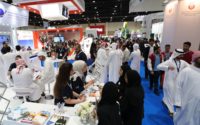
These questions sit at the centre of WETEX 2026, taking place from 20 to 22 October at Dubai World Trade Centre.
Organised by Dubai Electricity and Water Authority, the exhibition brings together companies and decision-makers working across energy, water, sustainability, environmental technology, green mobility, hydrogen, digital transformation and smart infrastructure.
For Dubai, WETEX increasingly looks less like a specialist trade exhibition and more like a preview of the systems that will determine how future cities function.
Energy Is Becoming a Software Problem as Well as an Engineering Problem
Electricity systems were historically built around a relatively simple structure.
Large power plants generated electricity.
Transmission networks moved it.
Consumers used it.
That model is becoming more complicated.
Solar energy can enter the grid from different locations.
Electric vehicles create new demand patterns.
Battery storage allows electricity to be saved for later.
Buildings increasingly generate data about their own consumption.
AI systems can analyse demand.
Smart meters provide much more detailed information.
The electricity network becomes something that needs to be managed dynamically.
This creates a new role for software inside infrastructure.
Engineers still build the physical grid.
Digital systems increasingly help decide how efficiently that grid operates.
Artificial Intelligence Is Moving Into Infrastructure
AI receives enormous attention because of chatbots and generative tools.
Some of its most important applications may be much less visible.
Utilities generate huge amounts of operational information.
Energy consumption.
Equipment performance.
Maintenance histories.
Weather data.
Water demand.
Network behaviour.
AI can help identify patterns inside that information.
A system might recognise that a piece of equipment is behaving abnormally before it fails.
Another might help forecast electricity demand during periods of extreme heat.
AI could assist with identifying water leaks.
It can help optimise cooling systems inside large buildings.
The technology becomes valuable when intelligence moves from the screen into physical infrastructure.
Water May Become One of the Century’s Most Important Resources
Water security is particularly important for the Gulf.
The region cannot rely on large natural freshwater systems in the same way as many other parts of the world.
Desalination therefore plays an essential role.
But producing freshwater from seawater requires energy.
That connects water policy directly with energy policy.
More efficient desalination technologies can reduce costs.
Renewable energy can reduce the environmental impact.
Better networks can reduce losses.
Smart monitoring can detect leaks faster.
Wastewater can increasingly be treated and reused.
WETEX brings these areas together because future water systems cannot be considered separately from the wider sustainability challenge.
Desalination Is Becoming More Efficient
Traditional thermal desalination systems played a major role in Gulf development.
Reverse osmosis and other newer approaches can offer different efficiency advantages.
The long-term trend is toward producing each litre of usable water with less energy.
That matters at enormous scale.
A small efficiency improvement becomes significant when millions of people depend on the system.
Technology companies therefore compete not only on whether desalination works.
They compete on how efficiently, reliably and sustainably it can operate.
Solar Energy Fits Dubai’s Geography
Dubai has one resource in extraordinary abundance.
Sunlight.
That makes solar energy an obvious part of the long-term electricity mix.
But adding solar capacity creates another engineering challenge.
Solar generation changes throughout the day.
Electricity demand does not always match those changes.
Energy storage, grid management and demand forecasting therefore become increasingly important.
A solar panel is only one part of the future energy system.
The larger challenge is connecting generation, storage, distribution and consumption intelligently.
Battery Storage Could Change Renewable Energy Economics
Renewable power has often been criticised for variability.
The sun sets.
Wind changes.
Battery technology provides one potential answer.
Electricity generated when supply is strong can be stored and used later.
At grid scale, storage can help smooth demand.
At building scale, it can help businesses manage energy use differently.
Electric vehicles also create another enormous category of batteries connected to urban infrastructure.
This is why developments in battery chemistry, charging and energy management matter far beyond the automotive sector.
Electric Vehicles Require More Than Electric Cars
A city does not become EV-friendly simply because residents can buy electric vehicles.
Charging infrastructure needs to expand.
Apartment buildings need solutions.
Commercial fleets need fast charging.
Power networks need to understand demand.
Parking areas need redesign.
Payment systems need standardisation.
Battery recycling eventually becomes important.
Green mobility is therefore an infrastructure problem as much as an automotive one.
WETEX’s focus on the sector reflects this broader reality.
Hydrogen Remains One of the Big Energy Questions
Hydrogen attracts significant attention because it may help decarbonise sectors that are difficult to electrify directly.
Heavy industry.
Shipping.
Certain forms of transport.
Industrial heat.
Energy storage.
The challenge is economics.
Hydrogen needs to be produced.
Stored.
Transported.
Converted.
Every step consumes energy and infrastructure.
Green hydrogen, produced using renewable electricity, is particularly attractive from a sustainability perspective.
But cost and scale remain major barriers.
Events such as WETEX allow companies and governments to compare where the technology is genuinely becoming practical and where expectations remain ahead of reality.
Buildings Are Part of the Energy System
Energy discussions often focus on power generation.
How buildings consume electricity may be equally important.
Dubai’s climate makes cooling one of the largest sources of demand.
Better insulation.
More efficient HVAC systems.
Smart controls.
District cooling.
Building-management software.
Predictive maintenance.
All can reduce consumption without changing the quality of life inside the building.
This is important because the cleanest unit of electricity is often the one that never needed to be generated.
Efficiency can be less visually exciting than a new solar farm.
Economically, it can be extremely powerful.
Smart Cities Need Useful Intelligence, Not More Gadgets
The phrase smart city has been used so frequently that it risks becoming meaningless.
Installing sensors does not automatically make a city smart.
Collecting data does not automatically create value.
The real question is whether information improves decisions.
Can traffic systems reduce congestion?
Can water networks identify leaks faster?
Can buildings respond automatically to changing conditions?
Can utility providers forecast demand more accurately?
Can infrastructure problems be identified before citizens experience disruption?
Smart infrastructure succeeds when the technology becomes almost invisible.
People notice better services rather than more devices.
Sustainability Is Becoming an Economic Question
For businesses, sustainability is increasingly connected with cost.
Energy efficiency can reduce operating expenses.
Water efficiency can reduce resource consumption.
Solar installations may lower long-term electricity exposure.
Electric fleets can change fuel economics.
Waste reduction can improve material efficiency.
This changes the conversation.
Sustainability is not only a corporate-responsibility programme.
In many sectors it is becoming an operational strategy.
That shift matters because businesses adopt technologies much faster when environmental benefits also produce measurable financial returns.
Dubai Can Use Its Scale as a Testing Environment
Dubai has one major advantage when introducing infrastructure technology.
The city continues developing.
New communities can integrate modern systems from the beginning.
Existing districts can be upgraded.
Large utilities can deploy technology at meaningful scale.
Government institutions can coordinate ambitious projects more quickly than fragmented markets sometimes allow.
This makes Dubai a useful testing environment for technologies that eventually need deployment across other fast-growing cities.
Companies exhibiting at WETEX are therefore not looking only for product visibility.
Many are looking for opportunities to participate in real infrastructure projects.
The Gulf’s Climate Makes Innovation Urgent
Extreme heat creates engineering challenges that cooler regions do not face at the same intensity.
Cooling systems work harder.
Water demand matters more.
Solar exposure affects materials.
Energy demand can peak during difficult periods.
Infrastructure must remain reliable under harsh conditions.
Technologies proven in the Gulf can therefore develop an interesting commercial advantage.
If equipment performs reliably in a demanding environment, it may be attractive in other rapidly warming regions as well.
Climate adaptation itself could become a major export of expertise.
WETEX Is Also About Commercial Competition
Large sustainability exhibitions are not simply environmental forums.
Companies are competing.
Who can produce cheaper solar technology?
Who offers better water treatment?
Whose battery lasts longer?
Which AI platform can reduce utility costs?
Which charging system scales fastest?
Which building technology offers the best return?
The energy transition will involve enormous amounts of investment.
Businesses want a share of that market.
That competition can accelerate innovation.
The technologies that succeed will usually need to prove both environmental value and economic viability.
Business Visitors Also Experience Dubai as a Destination
WETEX attracts international executives, engineers, investors, suppliers and government representatives.
Their visit extends beyond exhibition halls.
Hotels.
Restaurants.
Transport.
Meetings.
Shopping.
Tourism.
Those planning time around the event can explore dining, attractions and other city experiences through Dubai City Guide.
This is one reason major trade events are economically important to Dubai.
They generate business activity while reinforcing the city’s position as a meeting point between global markets.
Infrastructure Is Becoming the Next Frontier of AI
AI’s first wave of mainstream visibility was digital.
The next wave may increasingly affect the physical world.
Power networks that predict demand.
Water systems that identify abnormalities.
Buildings that optimise themselves.
Maintenance systems that detect failure early.
Transport networks that respond dynamically.
This is where technology begins affecting everyday life without people necessarily interacting with an AI interface.
The intelligence disappears into infrastructure.
The Future City Will Be Judged by What People Do Not Notice
Successful infrastructure is often invisible.
The lights stay on.
Water arrives.
Buildings remain comfortable.
Transport works.
Charging is available.
Waste disappears.
Residents rarely think about the enormous systems making those things possible.
That is precisely why events such as WETEX matter.
Behind the city’s visible skyline is another city made of electricity networks, pipes, sensors, software, energy systems and engineering decisions.
From 20 to 22 October, that hidden city becomes visible inside Dubai World Trade Centre.
And the most important question will not be how much more infrastructure Dubai can build.
It will be how intelligently the infrastructure it builds next can operate.
MENALAC’s Leisure, Entertainment & Attractions Conference Returns With A Bang Focussing On The Changing Landscape Of Entertainment In The MENA Region

Ahmed Bin Saeed Presents Patrick Reed Hero Dubai Desert Classic Trophy After Thrilling Victory