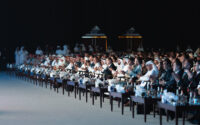


UAE National Orchestra at Etihad Arena: Abu Dhabi’s Classical Music Ambitions Take Center Stage
UAE National Orchestra at Etihad Arena: Abu Dhabi’s Classical Music Ambitions Take Center Stage
Abu Dhabi is well known for Formula 1, international concerts, museums, major sporting events and ambitious architecture.
On 10 October 2026, another part of the capital’s cultural identity will move into the spotlight.
The UAE National Orchestra takes the stage at Etihad Arena on Yas Island for a programme combining some of classical music’s most recognisable composers with an institution that represents something distinctly local: the development of a national professional orchestra in the United Arab Emirates.
Led by conductor François López-Ferrer, the concert will feature Georgian pianist David Khrikuli alongside a programme that moves from Leonard Bernstein to Sergei Rachmaninoff and Antonín Dvořák.
For audiences, it promises a night of large-scale orchestral music.
For Abu Dhabi, it represents something bigger.
It demonstrates how the city’s cultural strategy is expanding beyond hosting international performers toward building artistic institutions of its own.
A National Orchestra Means More Than One Concert
An orchestra can perform for a single evening.
Building an orchestra is a much longer project.
Professional musicians need training.
Conductors need experience.
Young performers need career pathways.
Audiences need opportunities to hear orchestral music regularly.
Schools and universities need connections with professional musicians.
Composers need ensembles capable of performing new work.
A national orchestra can sit at the centre of that entire ecosystem.
This is why the UAE National Orchestra matters beyond the programme performed at Etihad Arena.
It helps create cultural infrastructure.
Buildings can be constructed relatively quickly.
Artistic traditions require continuity.
A Programme Designed to Show the Orchestra’s Range
The Etihad Arena programme gives the orchestra several very different musical challenges.
The evening begins with Leonard Bernstein’s Overture to Candide.
Bernstein’s music combines classical technique with theatrical energy.
The overture is fast, colourful and immediately engaging, making it an effective introduction for audiences who may not regularly attend orchestral concerts.
The programme then moves to Rachmaninoff’s Piano Concerto No. 2.
For many listeners, this is one of the most emotionally recognisable works in the classical repertoire.
Finally, the orchestra performs Dvořák’s Symphony No. 8, a work filled with melodic writing and influences associated with the composer’s Czech musical background.
Together, these pieces provide drama, virtuosity and orchestral scale.
Rachmaninoff Remains Powerful More Than a Century Later
Some classical works survive because they are historically important.
Others survive because audiences continue responding emotionally to them.
Rachmaninoff’s Piano Concerto No. 2 belongs firmly in the second category.
The work combines enormous technical demands with melodies that can feel almost cinematic to modern listeners.
Its emotional intensity has helped it remain popular far beyond specialist classical audiences.
For the Abu Dhabi performance, Georgian pianist David Khrikuli takes the solo role.
A concerto creates a fascinating relationship between individual and ensemble.
The pianist must command attention.
The orchestra must support, answer and sometimes compete with the soloist.
Neither side works independently.
That interaction is part of what makes experiencing a concerto live so different from simply listening to a recording.
An Arena Changes the Classical Music Experience
Classical music is often associated with traditional concert halls.
Etihad Arena creates a very different setting.
It is a venue used for international pop concerts, basketball, comedy, family entertainment and combat sports.
Bringing a symphony orchestra into the same space sends an interesting message.
Classical music does not have to remain inside specialised cultural venues.
It can occupy the same large entertainment infrastructure used for contemporary popular culture.
That potentially introduces orchestral music to audiences who might feel less comfortable entering a traditional concert hall.
The orchestra becomes part of the broader entertainment calendar rather than something separated from it.
Abu Dhabi Has Been Building Cultural Infrastructure for Years
The UAE National Orchestra does not appear in isolation.
Abu Dhabi has spent years developing its cultural landscape.
Saadiyat Island has become one of the most ambitious museum and cultural districts in the region.
Louvre Abu Dhabi brought a major international museum institution to the capital.
Manarat Al Saadiyat hosts exhibitions and cultural programmes.
Performing arts, literature, film and heritage projects continue expanding.
A national orchestra fits naturally into this strategy.
Museums preserve and present visual culture.
An orchestra develops live musical culture.
Both require institutions rather than isolated events.
Why Classical Music Still Matters in a Digital World
Almost every major classical recording is now available instantly.
A listener can hear Rachmaninoff on a phone.
Watch famous conductors online.
Stream performances from major European orchestras.
This might appear to reduce the need for live concerts.
In practice, digital accessibility can make live performances more meaningful.
An orchestra produces sound physically.
Dozens of musicians create one musical structure in real time.
Strings move together.
Brass instruments create enormous physical force.
Percussion can be felt through the room.
A pianist performs difficult passages without the safety of editing.
Every performance contains small differences.
That cannot be fully reproduced through headphones.
The Conductor Is the Invisible Architecture
Audiences naturally watch soloists.
But the conductor plays a fascinating role.
A modern orchestra can contain dozens of musicians, each reading an individual part.
Someone has to turn those separate parts into one interpretation.
Tempo.
Dynamics.
Balance.
Phrasing.
Character.
Transitions.
The conductor shapes all of these elements.
François López-Ferrer therefore does much more than keep time.
His interpretation influences how the orchestra understands each piece.
The audience sees gestures.
The musicians translate those gestures into sound.
It is one of the most unusual forms of leadership in any profession.
Young Musicians Need Institutions to Aspire To
A national orchestra can also influence people who are nowhere near Etihad Arena on concert night.
Consider a young student learning violin, cello or flute in the UAE.
Without professional local institutions, the highest level of the career may seem geographically distant.
Serious orchestral careers might appear to exist mainly in London, Berlin, Vienna or New York.
A strong orchestra inside the UAE changes that perception.
Professional musicians become visible locally.
Students can attend performances.
Education programmes can develop.
Masterclasses become possible.
Career pathways become easier to imagine.
Cultural institutions create aspiration by making excellence visible.
International Musicians and Local Institutions Can Strengthen Each Other
Building a national cultural identity does not mean avoiding international influence.
Classical music has always travelled.
Composers influenced one another across borders.
Musicians moved between countries.
Conductors built international careers.
Modern orchestras frequently contain musicians from many national backgrounds.
The UAE is particularly suited to this model because the country itself is internationally diverse.
A UAE-based orchestra can therefore become both national and global.
Its identity comes from where it is institutionally rooted, not from requiring every musical influence to originate within the country.
Yas Island Gives Classical Music a New Setting
Yas Island is normally associated with high-energy entertainment.
Theme parks.
Formula 1.
Concerts.
Restaurants.
Hotels.
Shopping.
Major sporting events.
An orchestral concert adds a very different cultural experience to that mix.
Visitors coming to Abu Dhabi specifically for the performance can easily build a wider day or weekend around it.
Those looking for restaurants, attractions and other activities across the capital can explore options through Abu Dhabi City Guide.
This wider destination infrastructure helps major cultural events attract audiences beyond local residents.
Cultural Tourism Is Becoming More Important
Tourism is not driven only by beaches and shopping.
People travel for exhibitions.
Architecture.
Museums.
Film festivals.
Concerts.
Opera.
Orchestras.
Major cultural programming can therefore generate economic value well beyond ticket sales.
Visitors may stay in hotels.
Eat in restaurants.
Use transport.
Visit museums.
Extend their trip.
A strong cultural calendar gives people additional reasons to return to a city they may already know.
For Abu Dhabi, that complements its existing strengths in sport, heritage and major international attractions.
Classical Music Does Not Need to Become Pop to Grow
Cultural organisations sometimes assume younger audiences will only engage with classical music if it is radically simplified.
That underestimates listeners.
Rachmaninoff does not need to become a three-minute pop song.
Dvořák does not need electronic beats added to remain relevant.
What can change is access.
Venues can feel welcoming.
Programmes can be explained clearly.
Ticketing can be simple.
Social media can introduce the musicians.
Young people can encounter orchestras through education.
The music itself can remain ambitious.
People are often more open to unfamiliar art than institutions assume.
A National Orchestra Helps Define a Country’s Cultural Voice
National orchestras around the world play several roles simultaneously.
They preserve major works from the international repertoire.
Support local musicians.
Perform new compositions.
Represent their country internationally.
Participate in major ceremonies.
Educate younger audiences.
Record music.
Collaborate with visiting artists.
Over time, an orchestra develops its own sound and institutional character.
For the UAE National Orchestra, that story is still being written.
That makes the current period particularly interesting.
Audiences are not simply watching an established institution repeat traditions developed generations ago.
They are watching those traditions being built.
From Imported Culture to Cultural Production
Many rapidly developing global cities begin their cultural journey by importing major events.
International artists visit.
Touring productions arrive.
Famous exhibitions travel through.
That creates access and builds audiences.
The next stage is more difficult.
A city begins developing its own institutions.
Its own musicians.
Its own ensembles.
Its own creative professionals.
Its own cultural output.
The UAE National Orchestra represents movement toward that second stage.
International repertoire remains important, but the capability to perform it now exists within an institution rooted in the UAE.
The Etihad Arena Concert Is a Beginning, Not an Endpoint
The October concert should therefore be viewed as more than a single evening of Bernstein, Rachmaninoff and Dvořák.
Its larger significance lies in what comes afterward.
More performances.
More young musicians entering professional careers.
More collaborations.
Potential new compositions.
Stronger educational programmes.
Larger audiences.
International touring possibilities.
A national orchestra grows through repetition.
Every concert adds another layer.
Abu Dhabi’s Cultural Ambition Is Becoming Audible
Cities often express ambition visually.
New towers transform skylines.
Museums become architectural landmarks.
Infrastructure changes how people move.
An orchestra expresses ambition differently.
You cannot see the institution’s achievement from outside Etihad Arena.
You hear it when dozens of musicians begin playing together.
On 10 October, the UAE National Orchestra will fill one of Abu Dhabi’s largest entertainment venues with music written across different countries and centuries.
Yet perhaps the most important story will be happening in the present.
The UAE is building an orchestra designed to become part of its own cultural future.
And as the first notes rise inside Etihad Arena, Abu Dhabi’s cultural ambitions will not simply be visible.
They will be audible.