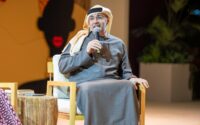


Guy Manoukian at Dubai Opera: Ten Performances and a Decade of Reinventing Middle Eastern Music
One successful concert can be memorable.
Returning to the same major venue ten times suggests something deeper.
On 11 December 2026, pianist and composer Guy Manoukian returns to Dubai Opera for his landmark 10th performance at the venue, celebrating a musical relationship that has developed alongside Dubai Opera’s own first decade.
The coincidence is appropriate.
Manoukian’s music has always dealt with continuity and reinvention.
Oriental melodies meet contemporary arrangements.
Fairouz and Abdel Halim Hafez can sit beside jazz influences.
Original compositions interact with musical memories audiences already carry.
The result is a style that feels regionally familiar without remaining trapped in the past.
His 10th Dubai Opera appearance therefore represents more than another date on a touring calendar.
It shows how an artist and venue can gradually become part of each other’s cultural identity.
The Piano Became His Central Language
The piano is traditionally associated strongly with Western classical music.
Manoukian uses it as a bridge into Middle Eastern melodic material.
That creates an interesting contrast.
The physical instrument belongs to one historical tradition.
The phrases played through it may belong emotionally to another.
This is exactly what culturally hybrid music does well.
It demonstrates that instruments do not permanently belong to one musical geography.
Musicians redefine them.
Oriental Melody Can Live Inside Contemporary Arrangement
Traditional melodies do not need to be preserved in identical form to remain meaningful.
Arrangement changes everything around them.
Percussion can become more modern.
Harmony can expand.
Jazz elements can enter.
The piano can replace or interact with traditional instruments.
Orchestral textures can add scale.
Yet the melodic identity remains recognisable.
This balance allows older musical ideas to reach audiences whose listening habits have changed.
Reimagining Fairouz Carries Responsibility
Fairouz occupies an extraordinary place in Arab musical culture.
Her songs are not simply recordings.
They are connected with morning routines, family memories, Lebanon, migration and several generations of listeners.
Reinterpreting that material requires confidence.
Change too little and the new performance adds nothing.
Change too much and the emotional identity can disappear.
The goal is not replacement.
It is perspective.
A new arrangement can make the audience hear a familiar melody with renewed attention.
Abdel Halim Hafez Creates a Different Emotional World
Abdel Halim Hafez represents another major pillar of Arab musical memory.
His catalogue carries romance, longing and the grand emotional language associated with a particular era of Egyptian music.
Bringing those songs into a modern instrumental environment demonstrates how durable strong melodies can be.
Production technology changes.
Listening habits change.
The emotional structure remains.
That is why certain songs survive several generations of reinterpretation.
Jazz Creates Space for Freedom
Manoukian’s engagement with jazz standards and jazz-influenced performance adds another dimension.
Jazz values interpretation.
The written composition is only the starting point.
Timing can shift.
Improvisation can appear.
Musicians respond to one another.
A familiar piece can sound different on different nights.
This fits naturally with an artist already interested in reworking established Middle Eastern repertoire.
The core idea is the same.
Respect the material without treating it as untouchable.
Dubai Audiences Understand Cultural Mixing Instinctively
Dubai is an especially suitable environment for Manoukian’s music because the city already operates through cultural overlap.
Arab residents bring different musical traditions.
European and Asian audiences bring others.
Younger listeners consume global playlists rather than national catalogues.
A concert can therefore move between Fairouz and jazz without needing to justify the transition.
The audience’s own listening habits may already do the same thing every day.
Ten Performances Mean a Relationship Has Formed
A venue and artist develop history through repetition.
Audiences remember previous shows.
Production teams become familiar.
The performer knows the room.
The room becomes associated with the performer.
This can gradually create a cultural tradition.
Manoukian’s 10th Dubai Opera performance is significant precisely because it demonstrates continuity.
Dubai’s live-music culture is old enough now to contain recurring relationships rather than only first appearances.
Dubai Opera’s Own Anniversary Adds Symbolism
Dubai Opera celebrated its first decade in 2026.
That makes Manoukian’s landmark performance especially well timed.
Both stories involve cultural infrastructure becoming established.
The venue opened as an ambitious new institution.
A decade later, it has accumulated memories.
Performances.
Artists.
Audiences.
Regular visitors.
An institution becomes culturally meaningful through repetition.
Buildings provide the stage.
People provide the history.
Middle Eastern Music Is Not One Sound
International audiences sometimes speak about Middle Eastern music as though it were one category.
It is extraordinarily diverse.
Lebanese traditions differ from Egyptian ones.
Gulf music carries different rhythmic and melodic identities.
Turkish, Persian and North African traditions add other worlds.
Modern pop creates further variation.
An artist blending “oriental” and contemporary influences is therefore working with a huge cultural palette rather than one fixed sound.
Manoukian’s repertoire reflects that complexity.
Instrumental Music Can Cross Language More Easily
Lyrics create immediate cultural specificity.
Instrumental music removes one barrier.
A listener unfamiliar with Arabic can still recognise emotion in a Fairouz melody played on piano.
They may not know the original words.
The melodic shape communicates anyway.
This makes instrumental reinterpretation a powerful form of cultural export.
It allows audiences to enter through sound first.
Curiosity about the original can come later.
Music Can Preserve Memory Without Becoming Nostalgia
There is an important difference between cultural memory and nostalgia.
Nostalgia can become passive.
It asks audiences to remember when things were better.
Cultural memory can remain active.
It takes older material and allows people to use it in the present.
Manoukian’s arrangements work best when they achieve the second.
The audience recognises the song.
But the performance does not ask them to pretend time has stopped.
The Modern Middle Eastern Audience Is Multigenerational
A Dubai Opera audience may contain grandparents who know a classic from its original era.
Parents who heard it at home.
Young adults who discovered it through streaming or reinterpretation.
That generational layering creates powerful concert moments.
Several people can recognise the same melody for completely different reasons.
Music becomes a shared family archive.
Live Performance Gives Familiar Music New Risk
A recorded classic is fixed forever.
A live reinterpretation can change.
Tempo differs.
The pianist takes more time.
A solo develops.
An ensemble responds differently.
This uncertainty makes familiar music worth hearing again.
The audience already knows the destination.
It does not know exactly how the musicians will arrive there.
Dubai Opera Gives Instrumental Detail Space
A piano-led concert requires good acoustic focus.
Small differences in touch matter.
A note can be struck sharply or allowed to bloom.
Dynamic control shapes emotion.
Dubai Opera allows these subtleties to remain audible while still supporting larger ensemble sections when the music expands.
The venue can therefore support both intimacy and spectacle.
The Concert Can Anchor a Wider Dubai Evening
Visitors attending the December performance can easily combine it with Downtown dining, hotels and attractions.
Those planning more activities can explore the city through Dubai City Guide.
This is one of the advantages of embedding major cultural venues within active urban districts.
People do not simply arrive, watch and leave.
The performance becomes part of city life.
A Regional Artist Can Become Part of a Venue’s Identity
Great cultural venues eventually develop recurring artistic relationships.
Certain conductors become associated with orchestras.
Certain performers return repeatedly to particular halls.
Audiences begin expecting those connections.
Manoukian’s repeated appearances suggest Dubai Opera is beginning to accumulate this kind of history.
That matters for a relatively young institution.
Culture becomes deeper when people can say, “I remember the last time he played here.”
Reinvention Is How Music Survives
The oldest melodies still performed today survived because generations refused to leave them untouched.
Different singers changed phrasing.
Instrumentalists changed arrangements.
Technology changed recording.
Audiences changed context.
Preservation through absolute repetition is often less effective than preservation through reinterpretation.
Music remains alive because people continue doing something with it.
Ten Shows Are Really Ten Chapters
On 11 December, Guy Manoukian will not simply return to a familiar piano in a familiar venue.
The evening represents accumulated history.
Nine previous Dubai Opera appearances.
A venue now celebrating a decade.
Audiences that have changed alongside both.
Songs that may be older than everyone in the room but continue finding new arrangements.
The 10th performance therefore feels less like repetition than another chapter.
That may be the strongest sign that Dubai’s cultural scene is maturing.
The city is no longer collecting only spectacular firsts.
It is beginning to build traditions worth returning to.

Beautyworld Middle East 2024: Next In Beauty Conference Reveals Trends, Innovations And Industry Predictions For 2025 And Beyond

The First Edition Of AlUla Art Residency Closes With Artists Premiering Contemporary Works Inspired By The Historic Oasis Of AlUla