


Fatima Al Hashimi at Zayed National Museum: When Emirati Voice Meets Classical Tradition
Cultural development is often easiest to see through buildings.
A museum opens.
A theatre appears.
A cultural district expands.
But the deeper transformation happens when artists begin using those institutions to create something rooted in the place itself.
On 7 December 2026, Emirati soprano Fatima Al Hashimi performs at Zayed National Museum with pianist Ina Chareli in a recital that moves between classical and traditional Arabic repertoire.
The programme may be intimate compared with the scale of an arena concert.
Its cultural significance is much larger.
An Emirati voice performing inside one of Abu Dhabi’s major national institutions represents a meeting between local identity, international classical technique and the UAE’s growing investment in artistic production.
The Voice Connects Traditions Naturally
The human voice is one of the few musical instruments shared by every culture.
The technique changes.
Language changes.
Scale changes.
Ornamentation changes.
But the physical source remains the same.
Breath.
Body.
Resonance.
This makes vocal performance especially suitable for crossing musical traditions.
A classically trained soprano can work with Western repertoire while also exploring Arabic melodic expression.
The voice becomes the bridge.
Classical Singing Requires Extraordinary Control
Opera and classical vocal performance can appear effortless when performed well.
The physical demands are considerable.
Breath has to be managed precisely.
Long phrases need support.
Pitch needs stability.
Volume needs control.
Words must remain understandable.
The singer also needs to communicate emotion while maintaining all of that technique.
Unlike many studio recordings, live recital performance offers little protection.
There is no second take.
The sound exists in real time.
That vulnerability is part of what makes the form compelling.
Arabic Music Uses the Voice Differently
Arabic vocal traditions contain their own extraordinary technical demands.
Ornamentation.
Microtonal movement.
Melodic flexibility.
The relationship between language and musical phrasing.
Emotional interpretation.
The singer may work inside musical structures very different from the Western classical system.
Bringing these worlds into one programme does not require one tradition to imitate the other.
The interesting possibilities appear when each retains its identity.
An Emirati Soprano Represents a New Cultural Path
The UAE’s cultural development has historically included large amounts of imported international art.
That is natural for a young country building institutions quickly.
International orchestras visit.
Touring productions arrive.
Famous artists perform.
Museums develop global collections.
The next stage is more important.
Local artists need pathways into those institutions.
An Emirati soprano performing a serious recital represents exactly that transition.
Culture is no longer only something hosted.
It is something produced.
Zayed National Museum Changes the Meaning of the Performance
Venue context matters enormously.
A recital in a generic hall would still have musical value.
Performing at Zayed National Museum adds a symbolic layer.
The museum is connected with national history, identity and the development of the UAE.
An Emirati artist performing there becomes part of a wider cultural conversation.
The programme can move between international classical traditions and Arabic repertoire while physically sitting inside an institution devoted to the country’s story.
That combination creates meaning before the first note is sung.
Piano and Voice Create a Highly Exposed Format
Large ensembles can create enormous sonic power.
A voice-and-piano recital is much more exposed.
There is nowhere for either performer to hide.
The pianist must support without overwhelming.
The singer must carry melody and text.
The interaction becomes almost conversational.
A small change in tempo matters.
A pause matters.
Breathing matters.
The audience hears detail.
This intimacy can make a recital more emotionally intense than a larger production.
Ina Chareli’s Role Is More Than Accompaniment
Calling the pianist an accompanist can underestimate the musical role.
In art song and recital repertoire, the piano often carries its own narrative.
It can create atmosphere before the singer enters.
Respond to the vocal line.
Shift emotional colour.
Suggest movement.
Complete phrases.
Voice and piano create one structure together.
A great recital works because neither performer feels secondary.
Arabic Repertoire Gains Something in a Recital Setting
Traditional Arabic music is often experienced through larger ensembles or culturally specific performance environments.
Placing selected repertoire inside a recital creates a different listening frame.
The audience may focus more strongly on lyrics.
Melodic ornamentation becomes easier to hear.
The relationship between voice and piano can reveal familiar material from a new perspective.
Reinterpretation does not need to weaken tradition.
It can reveal another side of it.
Classical Music Is Becoming Less Geographically Fixed
For centuries, Western classical institutions were concentrated heavily in Europe and later North America.
That geography has changed.
Major orchestras perform in Asia.
Conservatories develop across the Gulf.
Opera singers emerge from countries with relatively young classical institutions.
Audiences become more international.
This matters because classical music does not belong permanently to the countries where much of the repertoire originated.
Performance keeps changing ownership.
Every new generation and location adds interpretation.
Abu Dhabi Is Building the Institutions Around the Artists
A serious cultural ecosystem needs several parts.
Venues.
Schools.
Teachers.
Festivals.
Museums.
Funding.
Professional opportunities.
Audiences.
Media attention.
One recital cannot create that ecosystem.
It can show whether the ecosystem is beginning to function.
When local artists perform inside major national institutions, the system becomes more visible.
Young students can imagine careers that previously seemed distant.
Representation Matters Most When It Becomes Normal
The long-term goal should not be treating every Emirati classical performer as a novelty.
Success arrives when local artists appear naturally across cultural programming.
The audience sees an Emirati soprano and thinks first about the music.
That normalisation takes time.
Early high-profile performances help create it.
Music Education Benefits From Visible Role Models
Imagine a young UAE student learning voice or piano.
International stars can be inspiring.
A professional artist from the same country creates a different kind of possibility.
The career feels geographically closer.
The student can imagine a path.
Local role models make artistic professions seem less abstract.
This is one reason public performances have educational consequences beyond the audience in the room.
The Museum Becomes a Living Space
Museums are often imagined as places where the past is displayed quietly.
Modern cultural institutions increasingly operate differently.
Concerts.
Lectures.
Workshops.
Performances.
Public programmes.
These activities make museums active.
A recital at Zayed National Museum turns the building from a place where culture is observed into a place where culture happens.
That distinction matters.
Abu Dhabi’s Cultural District Is Becoming More Connected
The capital’s cultural development increasingly links museums, festivals and performance.
Saadiyat and surrounding institutions create opportunities for visitors to experience visual art, history and live music within the same city stay.
Those planning a wider cultural visit can explore museums, restaurants and other experiences through Abu Dhabi City Guide.
This type of cultural clustering strengthens tourism because visitors can build entire itineraries around the arts.
Arabic and Classical Traditions Do Not Need to Compete
Cultural conversations are often framed as choices.
Local or international.
Traditional or contemporary.
Arabic or Western classical.
Real artistic life is more flexible.
A performer can study one technique and remain rooted in another cultural identity.
A programme can contain repertoire from several traditions without forcing them into one homogeneous sound.
That complexity reflects modern Abu Dhabi itself.
The Most Important Instrument Is Still Human
The music industry is becoming more technological.
AI-generated music.
Digital instruments.
Virtual production.
Algorithmic recommendation.
These developments will continue.
A recital built around one human voice and one piano offers a useful contrast.
Nothing is hidden behind enormous production.
No spectacle is required.
The audience listens to breath, touch, phrasing and interpretation.
The oldest musical technology remains surprisingly powerful.
A Small Performance Can Tell a Large Story
Fatima Al Hashimi’s recital may not create the international headlines of Formula 1 or a stadium concert.
Cultural development should not be measured only through crowd size.
A national culture becomes stronger when it can support both spectacle and intimacy.
Large international events matter.
So does one local artist standing beside one pianist and performing with complete attention.
On 7 December, Zayed National Museum becomes the setting for exactly that kind of moment.
An Emirati soprano.
Classical technique.
Arabic musical identity.
A national institution.
Together, they tell a story about a cultural future Abu Dhabi is not merely importing.
It is beginning to create for itself.
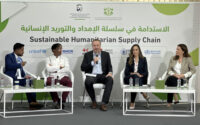
Sustainable Humanitarian Supply Chain Takes Center Stage At Dubai’s International Humanitarian City In Preparation For COP28

Dubai Press Club And Google News Initiative Join Hands To Equip Region’s Journalists With Advanced Digital Skills