

Congress ACI 2026: Why the Future of AI Also Depends on the Future of Arabic
Artificial intelligence is often discussed as though language were simply an interface.
Ask a question.
Receive an answer.
Translate a sentence.
Generate some text.
But language is much more than a way of communicating with software.
Language carries knowledge.
History.
Identity.
Business.
Education.
Media.
Culture.
And increasingly, economic value.
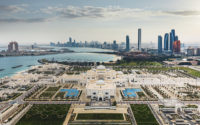
That broader idea sits at the centre of the fifth Congress of Arabic & Creative Industries, taking place on 20 September 2026 at Manarat Al Saadiyat in Abu Dhabi.
This year’s theme positions Arabic as infrastructure for the digital age rather than something technology companies merely need to translate.
That distinction matters.
If Arabic does not develop strongly inside artificial intelligence, digital publishing, gaming, education and online platforms, hundreds of millions of speakers risk consuming a technological future designed primarily around other languages.
Arabic Is a Global Language
Arabic is spoken across a vast geographic area.
North Africa.
The Gulf.
The Levant.
Parts of East Africa.
Large communities throughout Europe and elsewhere.
But Arabic is not one uniform digital dataset.
Dialects differ considerably.
Modern Standard Arabic exists alongside local speech.
Vocabulary changes across countries.
Historical texts use different structures.
Specialised terminology creates additional complexity.
For technology companies, this makes Arabic both an enormous opportunity and a difficult engineering challenge.
A system that technically “supports Arabic” may still perform badly for many actual Arabic speakers.
AI Makes Language Infrastructure More Important
The rise of generative AI changes the importance of language resources.
Large language models learn patterns from enormous quantities of text.
If one language has much more high-quality digital material available than another, AI performance may reflect that imbalance.
This creates a feedback loop.
Better digital resources create better AI.
Better AI encourages more people to use the language digitally.
More digital activity creates additional data and content.
Languages with weak digital infrastructure risk falling behind.
This is why investment in Arabic AI cannot begin only with the final chatbot.
It needs the underlying infrastructure.
Datasets.
Terminology.
Digitised archives.
Speech resources.
Publishing.
Research.
High-quality content.
Translation Alone Is Not Enough
One common approach to global technology is to build a product in English and translate the interface.
That works for simple software.
It becomes less effective when language itself is part of the product.
An AI assistant needs to understand meaning.
Humour.
Cultural context.
Formal and informal language.
Regional vocabulary.
An Arabic-speaking user should not feel they are interacting with an English system wearing an Arabic interface.
True localisation goes deeper.
This is especially important for education, media and government services where precise meaning matters.
The Creative Economy Depends on Intellectual Property
Congress ACI also places strong emphasis on creative industries.
Books.
Film.
Television.
Gaming.
Music.
Digital media.
Publishing.
These sectors do more than produce culture.
They produce intellectual property.
A successful fictional character can become television content, merchandise, games and international licensing.
A book can become a film.
A game can become a franchise.
A music catalogue can generate revenue for decades.
Countries increasingly recognise creative intellectual property as an economic asset.
Arabic-speaking markets have enormous cultural resources but have not always converted those resources into globally scalable intellectual property.
That creates opportunity.
Gaming Could Become a Major Arabic Content Industry
Gaming deserves particular attention.
The Middle East has a large young population and strong gaming demand.
Yet much of the content consumed in the region is created elsewhere.
Arabic-language games remain comparatively limited.
That can change.
Game development combines technology with storytelling, art, music, design and intellectual property.
A strong regional gaming industry could create jobs while also producing stories that reflect Arab culture in ways imported content cannot.
Localization matters too.
Players respond differently when a game communicates naturally in their language rather than offering awkward translated text.
Publishing Is Being Reshaped by Digital Technology
The publishing industry faces its own transition.
Readers increasingly consume content through digital platforms.
Audiobooks expand accessibility.
AI can assist editing and translation.
Print-on-demand changes distribution.
Social media influences which books become popular.
At the same time, publishers need to protect intellectual property in an environment where content can be copied instantly.
Arabic publishing has another challenge.
Markets are spread across numerous countries with different distribution systems.
Digital platforms can reduce some of that fragmentation.
A book can potentially reach readers across the Arab world without depending entirely on physical bookstore networks.
AI Can Help Arabic Creators Reach Global Audiences
Technology creates opportunities as well as risks.
Translation systems can help an Arabic writer reach international readers.
AI-assisted subtitling can help filmmakers distribute content globally.
Voice technology can make Arabic media more accessible.
Search systems can improve discovery of Arabic archives.
Creative tools can reduce production costs for smaller studios.
The challenge is ensuring these systems respect the language rather than flattening cultural differences.
Technology should expand creative possibilities, not make everything sound identical.
Abu Dhabi Is Building a Cultural Technology Conversation
Abu Dhabi is an appropriate host for Congress ACI because the city has invested heavily in both culture and technology.
Saadiyat Island has become a major cultural district.
Museums and educational institutions create one part of the ecosystem.
Government investment in AI and digital industries creates another.
The Congress sits between those worlds.
It asks what happens when language, culture and technology become part of the same economic strategy.
Visitors attending the event can also explore the capital’s cultural attractions, restaurants and other experiences through Abu Dhabi City Guide.
Manarat Al Saadiyat itself places the event inside one of Abu Dhabi’s most important cultural areas.
Language Technology Is Also a Business Opportunity
Supporting Arabic is not simply a cultural responsibility.
It can be commercially valuable.
Hundreds of millions of potential users need search, customer service, education, finance and entertainment tools that work naturally in Arabic.
Companies capable of solving those problems gain access to a substantial market.
Arabic speech recognition can power call centres.
AI assistants can support government services.
Educational platforms can reach students.
Financial applications can serve customers more effectively.
Media companies can analyse and distribute Arabic content.
Language infrastructure becomes economic infrastructure.
The Dialect Challenge Could Produce Innovation
Arabic dialect diversity is often described only as a difficulty.
It can also become a source of innovation.
A model capable of understanding Gulf Arabic, Egyptian Arabic, Levantine Arabic and North African varieties needs sophisticated language technology.
Companies solving that problem can develop expertise relevant to multilingual AI more broadly.
The challenge encourages better contextual understanding.
Users do not want to constantly translate themselves into formal language for a machine.
The technology should adapt to the user.
Creators Need Better Financing
Creative industries often struggle with funding because their economics differ from conventional businesses.
A film may require substantial capital before earning any revenue.
A game can take years to develop.
A publishing catalogue produces income gradually.
Investors need to understand intellectual property rather than simply physical assets.
One of the important roles of events such as Congress ACI is bringing creators into the same room as investors and policymakers.
Creative industries grow more quickly when financing structures understand how creative assets generate value.
Education Is Central to the Future of Arabic
The long-term strength of any language depends on education.
Children need high-quality materials.
Teachers need tools.
Universities need research resources.
Scientific vocabulary needs constant development.
Digital education platforms should work naturally in Arabic.
If students need to switch languages simply to access the best technology, Arabic gradually loses ground in high-value knowledge domains.
Preserving a language therefore means allowing it to function fully in modern science, business and technology.
Digital Archives Can Turn Heritage Into Living Knowledge
The Arab world contains enormous collections of manuscripts, literature, historical documents and recorded cultural material.
Digitisation can make those resources accessible to much larger audiences.
AI creates additional possibilities.
Search across enormous archives.
Identify connections between texts.
Transcribe recordings.
Assist researchers.
Translate selected materials.
But these systems need careful stewardship.
Historical information should not be fed into digital systems without understanding authorship, rights, context and accuracy.
Technology can expand access to heritage.
It should not detach that heritage from meaning.
The Future of Arabic Will Be Built, Not Assumed
Languages do not automatically remain strong simply because millions of people speak them.
They remain strong when people can use them for the activities that matter.
Education.
Science.
Business.
Entertainment.
Software.
Artificial intelligence.
Publishing.
Gaming.
Research.
If advanced digital systems work poorly in Arabic, users will move toward languages the systems handle better.
That makes technological support for Arabic a strategic issue.
Congress ACI Is About More Than Preserving a Language
Preservation can make language sound like something fragile stored in a museum.
Arabic is not a museum piece.
It is a living language used by enormous populations, businesses, governments, creators and communities every day.
The real challenge is expansion.
Can Arabic become a leading language of AI?
Can Arabic intellectual property travel globally?
Can regional game studios build international franchises?
Can publishing become more digital?
Can creators capture more economic value from their work?
These are questions about the future, not nostalgia.
That is what makes Congress ACI 2026 particularly relevant.
The digital economy will be shaped partly by the languages capable of fully participating in it.
For Arabic, that participation cannot be taken for granted.
It has to be built.